Circuit Sprint Routing Map: How to Choose Safer Lines
A deeper route-reading guide for Circuit Sprint, with lane zones, risk timing, and recovery examples.
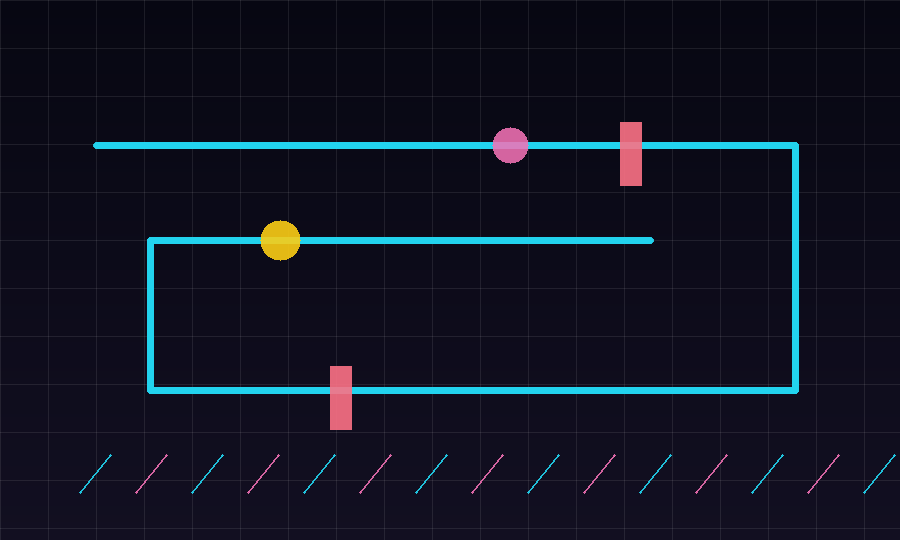
Circuit Sprint rewards players who can see the board as a route map instead of a chase field. The yellow charge node is tempting, but the safest path to it is rarely a straight line. Strong runs come from choosing a lane, reading the surge gate, and deciding whether the next move should be direct, delayed, or wide.
This guide breaks the board into practical zones. It is written for players who already understand the basic controls and want to raise their average score, not only their best lucky run.
The three route zones
The board has three useful zones. The top rail is fast because it covers a lot of horizontal distance. It is also exposed because surge gates cross it visibly. The center connector is flexible and lets you change sides, but it is easy to overuse. The lower rail gives more recovery space and often works better when the board feels crowded.
Think of every node as belonging to one of these zones. A top node should usually be approached from the top rail only if the surge gate has just passed. A center node can be taken quickly if the next target is readable. A lower node is a good chance to slow down and reset your movement rhythm.
Read danger before reward
The most common mistake is reading only the reward. A yellow node appears, the player moves immediately, and the signal meets a red gate halfway across the lane. The better habit is to ask one question first: what danger crosses the route between here and there?
If the red gate is moving into your path, wait or choose a wider route. A safe route that takes two extra turns often scores better than a direct route that causes a collision or a panic correction. Circuit Sprint is short, but it is not a pure reflex test. It is a rhythm and routing test.
When to use the center connector
The center connector is powerful because it keeps both sides reachable. It is also where indecision happens. Players who sit in the center too long often get trapped between two possible nodes and commit late to both.
Use the center connector when it solves a clear problem:
- The next node is on the opposite side and the top rail is blocked.
- A surge gate has just crossed the upper route.
- You need a small adjustment before entering a safer lane.
- You are recovering after overshooting a node.
Do not use the center simply because it feels central. If the lower rail is open and the node is low, take the lower rail. If the top rail is clear and the node is high, move decisively.
Recovery after a bad route
A bad route is not always a failed run. The real failure is often the second decision after the mistake. When you miss a clean line, do not immediately chase the next visible node. First, return to a stable lane and rebuild the board picture.
The fastest recovery pattern is usually: stop holding direction, move one step away from the nearest surge gate, then choose the next route only after the gate rhythm is visible again. This costs less time than fighting the board with constant diagonal corrections.
Score targets that matter
A 30 point run means you understand the controls. A 60 point run means you can read the first few surge cycles. A 100 point run means you are choosing routes rather than reacting to every object. These targets matter because they describe habits, not just numbers.
When you practice, write down why a run ended. Was the route too direct? Did you enter the center late? Did you chase a corner node through an active gate? One clear note after each run is more useful than playing ten unfocused rounds.
A simple practice drill
Play five runs with one restriction: no direct route through an active surge gate. If the shortest route is blocked, you must wait or go wide. This drill feels slower at first, but it teaches the board shape. After five runs, remove the restriction and play normally. Most players will notice that the board feels less chaotic.
Circuit Sprint is small on purpose. A short game can still have real decisions when the scoring rewards reading, recovery, and restraint. The route map is the game. The charge node is only the reason to move.