Circuit Sprint Strategy: How to Read the Board Before You Move
A concise strategy guide for Circuit Sprint, including route timing, charge node priority, and safe movement habits.
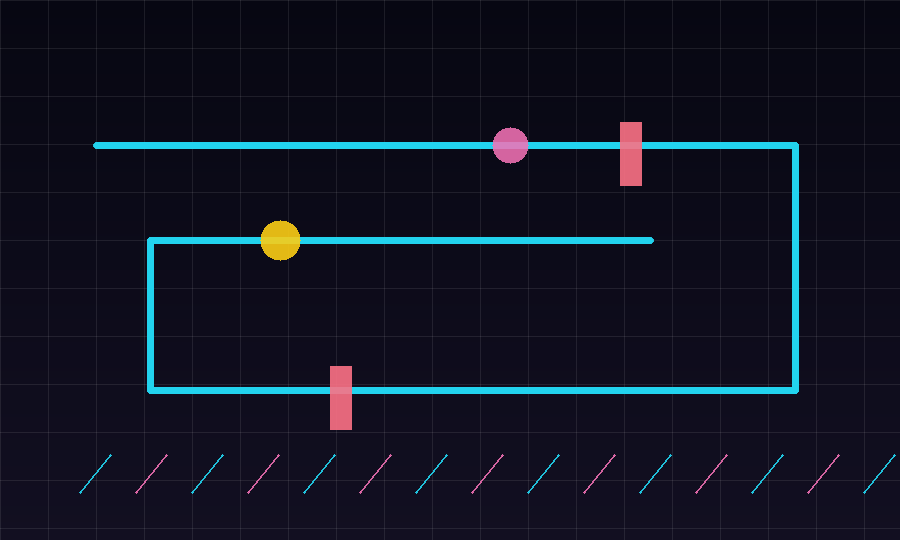
Circuit Sprint looks like a movement game, but the better scores come from board reading. The player is a signal moving through a circuit path. Charge nodes increase score. Red surge gates punish impatient movement. The useful habit is simple: decide where the danger will be, not only where it is now.
Watch the surge direction
The red gates move on a repeated rhythm. During the first few seconds, do not chase the first charge node blindly. Watch how the gates cross the long lines, then move after the pattern is clear.
If a gate is crossing your target route, step sideways and let it pass. Losing a second is better than resetting your momentum with a collision or panic move.
Take wide routes when the board is crowded
The shortest route is not always the fastest. A wide route that stays clear of surge gates often produces a cleaner chain than a direct route through traffic.
Think of the board in three zones:
- The upper rail, which is fast but exposed
- The center connector, which is useful for switching sides
- The lower rail, which gives more recovery space
When the charge node appears near a corner, approach from the safer rail rather than cutting through the busiest crossing.
Chain only when the next node is readable
The game rewards collecting nodes, but a good chain still needs control. After collecting a node, pause your direction for a fraction of a second and read the new target. If it appears near a moving gate, wait. If it appears in open space, accelerate.
The fastest players do not hold one direction constantly. They pulse movement, correct early, and avoid oversteering.
Keyboard rhythm matters
Arrow keys and WASD both work. Pick one and stay consistent. Tapping is usually safer than holding a direction across the entire board, especially near the edges where a small overrun can put the signal in a bad lane.
If you are overshooting nodes, reduce diagonal movement. Horizontal-first movement makes it easier to line up with long rails.
A beginner scoring target
For early runs, aim for clean collections rather than maximum speed:
| Target | Meaning |
|---|---|
| 30 points | You understand basic movement |
| 60 points | You are reading surge timing |
| 100 points | You are chaining routes reliably |
Once you can reach 60 points without panic movement, start taking more aggressive center-line routes.
Common mistakes
The first mistake is chasing a node through an active surge gate. The node is visible, so the route feels obvious, but the danger is moving into the same lane. Wait for the crossing or choose a wider path.
The second mistake is holding a direction too long. Circuit Sprint has short lanes and sharp corners. Constant movement can push the signal past a node or into a bad angle. Tapping in short bursts gives better control.
The third mistake is using the center connector as a resting place. The center is useful for switching sides, but it is not always safe. If you stop there without a plan, the next node often appears while you are still deciding.
Practice one habit at a time
Do not try to fix every mistake in one run. Play a run where the only goal is avoiding surge gates. Then play a run where the only goal is cleaner corner approaches. Then play a run where you focus on not oversteering.
Small habits stack. A player who makes one cleaner route decision per run will reach higher scores naturally, because the game rewards staying calm long enough to collect several nodes in sequence.
Circuit Sprint is intentionally short-session. A run should teach one board-reading habit at a time. Watch the surge, choose the safer rail, then collect with control.