Lantern Grid Strategy: Remember Patterns Without Guessing
Use chunking, anchor cells, rhythm, and calm reset habits to improve Lantern Grid memory scores in short browser sessions.
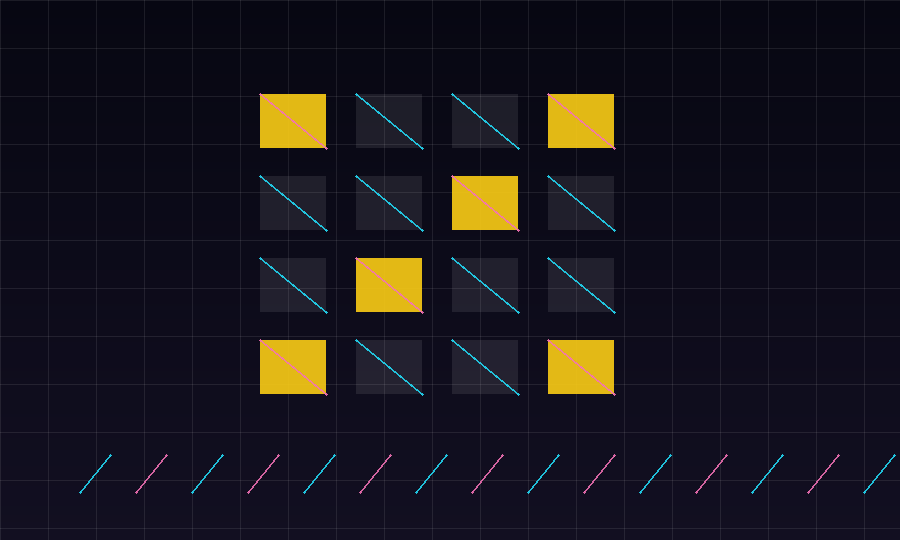
Lantern Grid is a memory game, but the best scores do not come from raw memorization alone. They come from turning a flashing pattern into a shape, a route, or a rhythm that your brain can replay. If every cell feels separate, the sequence becomes noisy. If the pattern has structure, it becomes manageable.
The goal is simple: watch the grid pulse, repeat the cells in order, and keep the round alive. The useful strategy is to reduce the amount of information you are trying to hold at once.
Name the corners and center
Before the round starts, mentally label the board. You do not need formal coordinates. Use plain language:
- Top left
- Top right
- Center
- Bottom left
- Bottom right
- Left edge
- Right edge
When a pattern appears, say the labels silently. “Top left, center, bottom right” is easier to hold than three unrelated flashes.
Turn sequences into shapes
Many patterns can be remembered as a line, angle, zigzag, box, or return path. Instead of memorizing each lantern one by one, ask what the sequence draws.
Examples:
| Pattern type | Memory cue |
|---|---|
| Top to bottom | A falling line |
| Left, center, right | A sweep |
| Corner, center, corner | A bounce |
| Four outside cells | A frame |
Shape memory is powerful because it compresses the sequence. You are not remembering four flashes. You are remembering a small movement.
Chunk longer rounds
When the sequence grows, split it into chunks of two or three cells. A six-cell round might become:
top left, center + right edge, bottom right + center, bottom left
After each chunk, pause for a tiny moment before entering the next one. This reduces accidental double-clicks and keeps your pace controlled.
Use rhythm without rushing
Some players remember patterns by timing: short, short, long, short. Rhythm helps, but only if it stays calm. If you tap faster than you can verify, rhythm turns into guessing.
A good pace is steady enough to feel confident and slow enough that each click is intentional. Lantern Grid is not a pure speed test. Accuracy matters more than dramatic tapping.
Reset after a miss
A miss can make the next round worse if you carry frustration into it. Treat each reset as a new observation round. Before restarting, ask one question:
What kind of pattern broke me?
Possible answers:
- I confused two corners.
- I forgot the middle cell.
- I rushed the final tap.
- I remembered the shape but not the direction.
That answer gives you a practice focus. If corners are the problem, name them more clearly. If direction is the problem, replay the pattern as a route, not just a shape.
Mobile play tips
On a phone, avoid covering the grid with your hand while the pattern plays. Watch first, then tap. If the screen is small, use the same finger for every tap until the board feels familiar. Multiple fingers can be faster, but they can also hide cells and increase accidental touches.
If you are missing near the edge of the grid, slow down and tap closer to the center of each cell. Clean input matters more than speed.
A scoring ladder
Use milestones instead of expecting a perfect run immediately:
| Target | What it means |
|---|---|
| 20 points | You understand the replay loop |
| 40 points | You can label positions |
| 80 points | You can chunk patterns |
| 120 points | You stay calm after long sequences |
Lantern Grid rewards a quiet kind of skill. Name the board, see the shape, chunk the sequence, and tap with intention. The pattern will still get harder, but it will stop feeling random.
That is the whole purpose of the game: make memory visible enough that players can improve one habit at a time.