Signal Drop Strategy: Lane Timing, Packet Control, and Clean Landings
Improve Signal Drop scores by reading lane rhythm, choosing safer drops, and avoiding panic moves as the board speeds up.
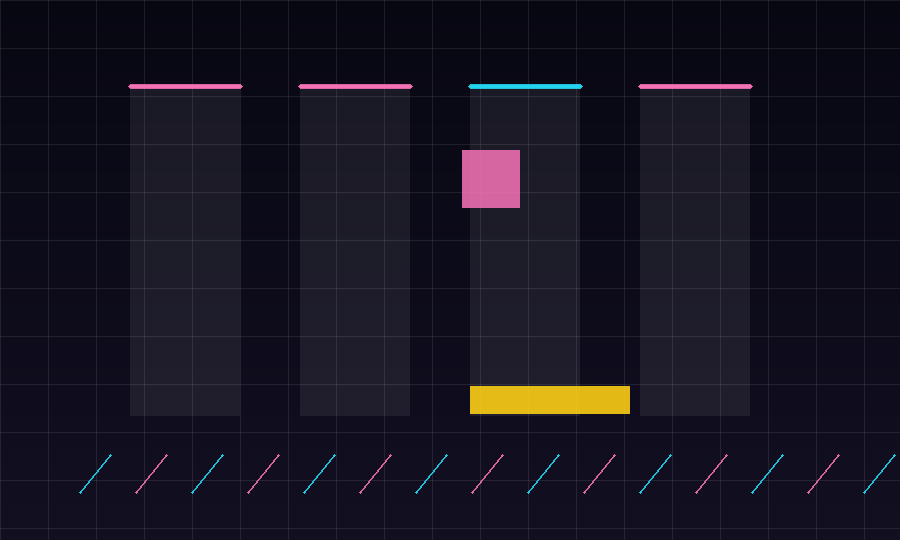
Signal Drop is a timing game disguised as a lane picker. The controls are simple: move left or right, then drop the packet. The score comes from choosing when not to drop as much as choosing where to drop. A clean landing is usually worth more than a desperate last-second save.
The goal is to land packets in matching gates while avoiding overloaded lanes. As the board speeds up, the best players stop chasing every opening and start reading the rhythm.
Learn the lane cycle first
At the beginning of a run, spend a few seconds watching the gates shift. Do not treat the first target as a race. The game is showing you how quickly lanes change and how long a safe opening lasts.
Look for three things:
- Which lane becomes safe most often?
- How long does a gate stay open?
- Does the danger move in a predictable sequence?
Once you see the rhythm, your drops become deliberate instead of reactive.
Move early, drop late
A common beginner mistake is moving and dropping at the same time. That creates two risks: the packet may leave from the wrong lane, and the target may change before the packet arrives.
Try this habit instead:
- Move into the intended lane early.
- Wait for the gate to become readable.
- Drop when the landing path is clear.
This makes the board feel slower because the final decision is only about timing, not movement and timing together.
Favor the middle lanes when uncertain
The edge lanes can be useful, but they are less forgiving. If the next safe gate appears on the opposite side, an edge position requires more movement to recover. Middle lanes give more options and reduce panic steering.
Use edge lanes when the target is obvious. Return toward the center when the board becomes crowded or when speed increases.
Do not chase every perfect match
Signal Drop rewards accuracy, but forcing a risky drop can cost the run. If the matching gate is blocked or moving too quickly, skip the immediate chance and set up for the next cycle.
This is especially important after the speed rises. The board tempts you to keep the same rhythm that worked at the start. Adjust sooner than feels necessary. A safe slower drop often beats a fast mistake.
Build a scoring ladder
Use score targets to measure progress:
| Target | What it shows |
|---|---|
| 40 points | You understand the controls |
| 80 points | You can wait for clean gates |
| 120 points | You are reading lane rhythm |
| 160 points | You are recovering under speed |
Do not judge a run only by the final number. Notice what caused the miss. Was it late movement, edge trapping, a rushed drop, or a missed rhythm change? One clear lesson makes the next run better.
Keyboard and touch habits
On keyboard, use short taps instead of holding a direction too long. Holding can overshoot the lane you wanted, especially when the board is already moving quickly.
On touch, make sure the tap target is intentional. If you are playing on a small screen, pause between lane changes and drops until the rhythm is comfortable. Signal Drop is designed for short sessions, so a careful one-minute practice run can be more useful than five rushed attempts.
A simple rule for better runs
If you are unsure, wait one beat.
That single habit prevents most early mistakes. The game is short enough that waiting feels costly, but a missed packet costs more. Read the lane cycle, move early, drop late, and let clean landings build the score.
When that habit becomes natural, Signal Drop starts to feel like a readable rhythm exercise instead of a reaction scramble.