Signal Drop Streak Recovery: What to Do After a Miss
A practical Signal Drop guide focused on rebuilding timing after a lane miss instead of rushing the next packet.
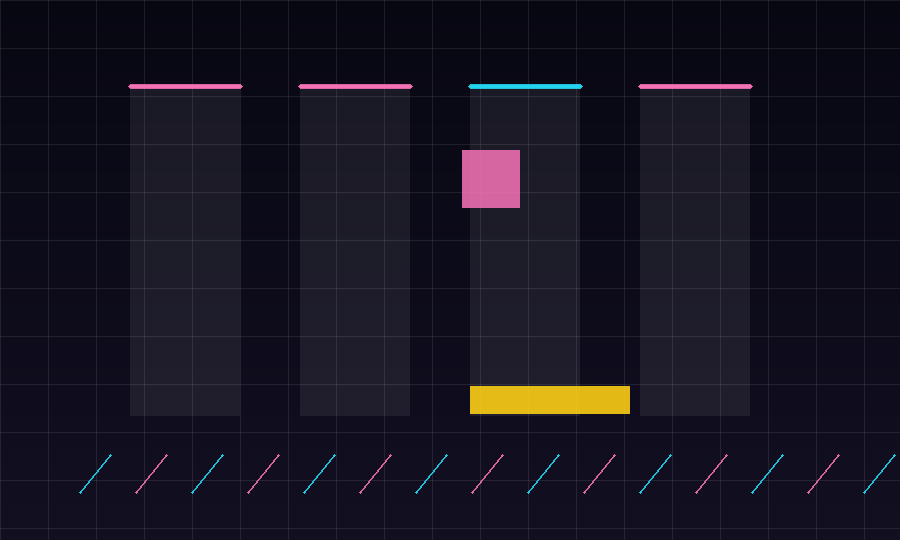
Signal Drop looks simple: move to the correct lane and let the packet land. The harder skill appears after a miss. Many players lose one lane, then lose the next two because they try to repair the streak with speed. The better approach is to treat a miss as a reset signal.
This guide is about streak recovery. A clean recovery does not always look dramatic, but it raises average score and makes the game feel slower.
Why misses chain together
A miss usually creates two problems. First, the score drops or stops climbing. Second, the player’s attention jumps from the gate rhythm to the mistake itself. That second problem is more dangerous. If you keep thinking about the last packet, you stop reading the next gate.
The gate keeps cycling whether the last move was good or bad. A recovery player accepts the result immediately and returns attention to the visible rhythm.
The three-step reset
After a miss, use a three-step reset:
- Move your eyes to the gate, not the packet.
- Return toward a center lane unless the next gate is already clear.
- Make one lane choice and stop correcting.
The center lane habit matters because it reduces distance to future gates. An outside lane is not wrong, but it is expensive when the next gate appears on the opposite side. Centering gives you options.
Do not chase the previous pattern
Signal Drop patterns can feel predictable for a few seconds, then change just enough to punish autopilot. After two left-side gates, it is tempting to assume the next one will stay left. Instead, watch the active gate. The board provides the information you need.
The safest players are not guessing less because they are slow. They are guessing less because they keep their eyes on the correct signal.
Rushed inputs are expensive
A late left-right-left correction often ends worse than doing nothing. It creates hand noise. It also makes the next packet harder to read because your input rhythm no longer matches the board rhythm.
When you are late, choose one lane and accept the outcome. A controlled miss is easier to recover from than a frantic miss. That may sound strange, but it is the same idea used in many timing games: keep the body rhythm stable so the next beat is readable.
Practice with recovery targets
Instead of practicing only high score, practice recovery targets:
| Target | What it trains |
|---|---|
| Miss once, then land the next packet | Attention reset |
| Miss on an outside lane, then return center | Lane discipline |
| Land five packets without double-correcting | Input restraint |
| Reach 72 points with at least one miss | Realistic consistency |
These goals are more useful than chasing a perfect run every time. Perfect runs are fragile. Recoverable runs are repeatable.
How to use soundless rhythm
Signal Drop does not need a loud rhythm track to have timing. You can create a silent count by watching the gate change lanes. Count “gate, lane, drop” as three separate beats. If you collapse those beats into one rushed action, mistakes multiply.
On mobile, slow this count down even more. Touch input has a different feel from keyboard input, and the small delay between seeing a gate and tapping the control can matter. Give yourself one earlier decision.
When to reset the run
Sometimes a run is worth resetting. If you are missing because your hand is tense or your eyes are stuck on the packet, use the reset button and start clean. Resetting is not failure. It is a way to keep practice quality high.
Signal Drop is designed for short sessions, so there is no reason to protect a messy run for too long. Play a clean minute, learn one habit, and start again.
Good timing is not only about landing the current packet. It is about being ready for the packet after the mistake. The player who recovers calmly will usually beat the player who tries to win the last point back immediately.